Unit Advisory Board Decisions
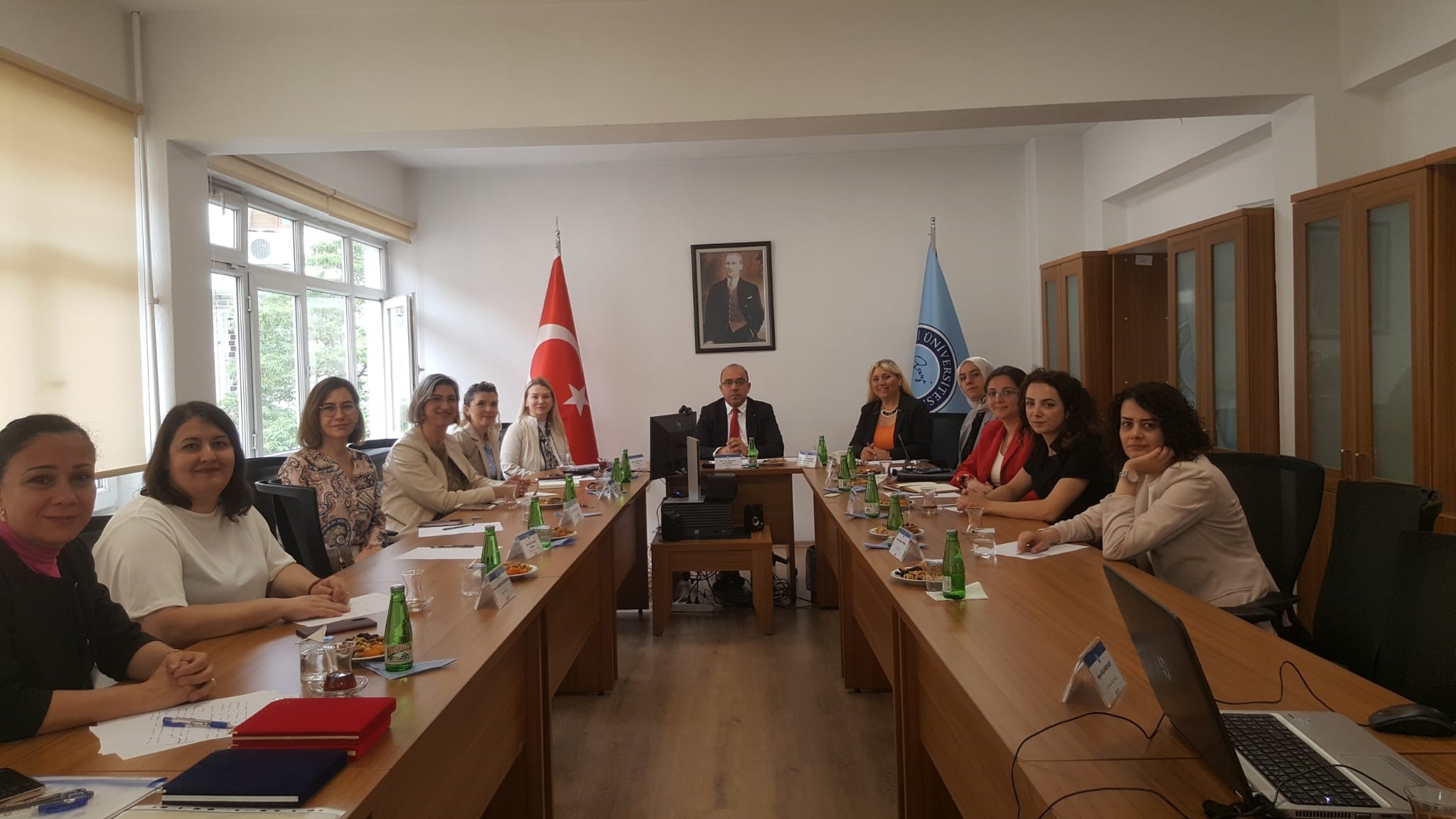
Decisions Taken with Our Advisory Board Members Who Participated in the GUQC Unit Visit on 21.06.2023
A discussion was held regarding planning a workshop with our Advisory Board members.
-
In collaboration with the Ministry of Environment, Urbanization and Climate Change, General Directorate of Environmental Management, and the General Directorate of Agricultural Research and Policies, studies could be conducted on Air Quality and Health;
-
In collaboration with our Department of Public Health and the General Directorate of Agricultural Research and Policies, studies could be conducted on Consumer Habits in Label Reading;
-
In collaboration with the General Directorate of Agricultural Research and Policies, studies could be conducted on Food Literacy;
-
By bringing together TÜBİTAK and our R&D Team, studies could be carried out on broader project topics, and this could be organized in the form of a workshop, and that support should be sought by corresponding with our academic departments.
-
Additionally, it was conveyed that since the General Directorate of Environmental Management of the Ministry of Environment, Urbanization and Climate Change requires “Statistics on Diseases Related to Air Quality” specific to Gazi University Faculty of Medicine, support could be provided to them upon receiving an official request in this regard.
Decisions of the Meeting Dated 22.03.2023, No. 01
The Institute Advisory Board convened on Wednesday, 22 March 2023 at 10:30 under the chairmanship of the Institute Director, Prof. Dr. A. Gülçin SAĞDIÇOĞLU CELEP, and adopted the following decision.
Members Absent: Ayşegül GÜMÜŞ BAŞKAYA, Dr. Mehmet Fatih KÖSE, Dr. Muharrem BAYTEMÜR, Pharmacist Nur SEYFELİ, Mustafa Örnek, Eyüp Öksüz, Hatice Mahur TURAN, Prof. Dr. Feyza ARICIOĞLU
Decision 01/01: In the letter numbered 609745 received from the Strategy Development Board, it was stated that:
“Within the scope of the preparation process of our University’s 2024–2028 Strategic Plan, the Mission, Vision, and Core Values have been updated by the Gazi University Science, Education, Arts, Technology, Entrepreneurship and Innovation Board (Gazi BEST). In order for this update process to be conducted with the views of our internal and external stakeholders and through a participatory approach, it is of great importance that the Mission, Vision and Core Values enclosed in the annex be discussed by the management boards and Advisory Boards of our units. In this context, it is requested that the attached documents be evaluated in your Management Board to obtain internal stakeholder feedback, and in your Unit’s Advisory Board to obtain external stakeholder feedback, and that the meeting minutes be submitted to our Board by Friday, 24 March 2023.”
Accordingly, it was unanimously decided that the views of the Unit Advisory Board regarding the updates to be made by the Gazi University Science, Education, Arts, Technology, Entrepreneurship and Innovation Board (Gazi BEST) on the Mission, Vision, and Core Values—specifically the need for additions as stated below (ANNEX:1 and ANNEX:2)—were appropriate.
Mission
To educate individuals who can lead society, who respect national, moral and human values, who are sensitive to contemporary issues, social responsibility, national problems and the environment; and to contribute to raising the welfare level of society and to lifelong learning by producing knowledge, services, and technology at a universal level and transforming them into practice.
ANNEX:1: (Emphasis may be placed on ethics and post-graduation support.)
Vision
To be a respected and pioneering university at national and international levels through multidisciplinary and high-quality research, entrepreneurship, advanced interactive education, and sustainable service to society.
ANNEX:2: (Emphasis may be placed on ethics and measurable values.)
Core Values
Gazi University, with the honor of hosting the first educational institution that trained the leading teachers of the Republic, and with the responsibility of being a research university, adopts the following values:
-
Pioneer in Education and Research: Excellence-oriented high academic quality that contributes to the formation of national culture and encourages learning and research.
-
Quality: Maintaining continuous quality improvement in education-teaching, research, and community service in alignment with institutional culture.
-
Participation: Ensuring the participation of students and staff in institutional decision-making processes by considering stakeholder opinions and perspectives.
-
Environmental Sensitivity: Paying close attention to environmental protection while developing and delivering products and services.
-
Inquisitive and Innovative: Seeking originality in science; being inquisitive and critical in developments related to research, education, and technology; and fostering contemporary, innovative structures that serve the needs of society and humanity.
-
Respect for People: Embracing national values while upholding a universal approach in which every opinion and thought can be expressed in peace and tolerance; regarding differences in religion, language, race, nationality, social background, gender, and thought as richness; and opposing all forms of discrimination.
-
Social Responsibility: Transferring the knowledge, technology, and services produced to society through internal and external stakeholders.
-
Commitment to Ethical Values: Valuing scientific ethics, being transparent, and upholding academic values with a reliable, harmonious, and collaborative approach in education, research, and practice environments.
-
Merit-Based Approach: Promoting success, talent, effort, and hard work; and carrying out selection and evaluation processes based on competencies and objectivity.
-
Strong Sense of Belonging: Being an institution whose membership is a source of pride and where the “Gazi” perception is strong within society.
-
Self-Confidence: Acting with courage and determination in fulfilling responsibilities in education, research, and community service, and in resolving open-ended issues encountered.
-
Commitment to History and Culture: Maintaining a sensitive approach toward historical, cultural, and national values.
-
Awareness of Geographical Responsibilities: Adopting as core values the institutional capacity to respond to and develop solutions for the physical, economic, strategic, and social conditions of the country and the issues faced in the surrounding geography with its available units and human resources.
Decision 01/02: Mr. Gürsel ERUL emphasized the following points:
-
The need to support the infrastructure for training, laboratories, and laboratory technicians in the examination of drinking water;
-
That due to the unconscious use of pesticides, pesticide control should be implemented in relation to the ecological chain and the problems arising or that may arise from their transmission to humans (minimizing their transmission to humans through the food chain);
-
That more emphasis should be placed on diseases that may occur due to metals and heavy metals entering the body through the respiratory tract, particularly in the context of air pollution.
Prof. Dr. Murat AKKAYA also stressed the importance of addressing the topic of filtration.
Dr. İlkem DEMİRKESEN MERT and Specialist Dietitian Nursel GÜNAY stated that they could support the event planned for June 5, Environment and Health Day with topics related to Sustainable Food.
The Institute Director, Prof. Dr. A. Gülçin SAĞDIÇOĞLU CELEP, invited all participants to give presentations within the scope of the Tuesday Conferences. She also noted that, to guide our students’ thesis studies, each participant should provide at least three topics that can be considered as potential research areas. She added that members of the Unit Advisory Board may also participate in the meeting to be held at Technopark on 24.03.2023 with companies involving faculty members. She concluded her remarks by emphasizing the importance of identifying potential areas of production in the field of Health Sciences in Ankara.
Mr. Hakan KEÇE stated that they could give a presentation regarding the general services provided by the Ministry of Family and Social Services, or the services carried out on a unit basis. He mentioned that they already receive internship applications through the Presidential Gateway and noted that they will continue to maintain joint cooperation with students in the field by providing information about the services they offer.
Advisory Board Members (Participants)
-
Dr. İlkem DEMİRKESEN MERT – General Directorate of Agricultural Research and Policies
-
Dr. Nilgün ÖZCAN – Ministry of Youth and Sports, General Directorate of Training, Research and Coordination
-
Prof. Dr. Murat AKKAYA – Turkish Dental Association
-
Gürsel ERUL – Ministry of Environment, Urbanization and Climate Change, General Directorate of Environmental Management
-
Specialist Dietitian Nursel GÜNAY – Turkish Dietitians Association
-
Hakan KEÇE – Ministry of Family and Social Services, Department of Training and Publications
Unit Advisory Board Meeting Dated 14.10.2022
On 14 October 2022 at 13:30, a meeting was held via ZOOM with the participation of 72 members from the Institute of Health Sciences alumni and our Advisory Board. The meeting was chaired by our Institute Director, Prof. Dr. A. Gülçin SAĞDIÇOĞLU CELEP. During the meeting, information was shared on the activities of our institute, activities carried out within the scope of being a research university, improvement activities, the vision and mission of our university and institute, priority areas, and national and international quality standards (ORPHEUS & YÖKAK) quality processes. An exchange of views also took place.
Topics Discussed
-
The Vision and Mission of the institute were evaluated, and information regarding the 2019–2023 strategic plan updates was shared.
-
Hatice Mahur TURAN, the TÜBİTAK representative on our Advisory Board and one of our external stakeholders, provided information on project funding opportunities for our students and graduates.
-
Dr. İlkem DEMİRKESEN MERT, the TAGEM representative on our Advisory Board and one of our external stakeholders, shared information on TAGEM R&D Project Funding in the field of health sciences.
-
Our Quality Student Representative, Birce ERÇELEN ÖZTÜRK, highlighted the role of student representation and the importance of students’ contributions throughout the process.
Recommendations
-
It was recommended to organize an Alumni Day gathering and a graduation ceremony.
-
Internationally, one of our alumni, Dr. Farıd MUSEYIBOV, currently the Head of the Department of Oral Pathology at Azerbaijan Medical University, suggested organizing an international congress.
-
Following discussions on this suggestion, a decision was made to proceed with the planning and organization of a congress/congresses.
The session concluded with wishes and recommendations.
Unit Advisory Board Meeting Dated 21.06.2022
Decision 02/01
In Article 4(y) of the Regulation on Clinical Research of Medicinal Products and Biological Products, the term “Principal investigator: a physician or dentist who has completed specialization or doctoral training in the field related to the research topic and is responsible for conducting the research” is defined.
In line with the recommendations conveyed to us by many of our academic departments and most recently expressed during the TUSEB online workshop held on 30 May 2022, the issue of whether the phrase could be revised as follows was discussed, considering the difficulties posed by limiting the principal investigator role strictly to physicians or dentists:
“The Principal Investigator is the person who has completed specialization or doctoral training in the field related to the research subject and is responsible for conducting the research.”
Prof. Dr. Gamze AKBULUT and the Turkish Dietitians Association Representative, Specialist Dietitian Nursel GÜNAY, stated that they supported this point.
Ayşegül GÜMÜŞ BAŞKAYA from the Turkish Medicines and Medical Devices Agency stated that this issue is defined by law, and when clinical research is conducted directly on humans, the person responsible for the research must be a physician or dentist (due to the clinical diagnosis and treatment context of the research).
Acting Head of the Department of Medical Pharmacology, Prof. Dr. Sevil ÖZGER İLHAN, also emphasized that the definition of principal investigator should remain as specified in the current regulation.
A consensus was reached that the matter could be reassessed in the continuation of the process.
Decision 02/02
Following discussions on proposals for the establishment of interdisciplinary graduate programs, Institute Director Prof. Dr. A. Gülçin SAĞDIÇOĞLU CELEP emphasized the necessity of moving forward through collaborative efforts strengthened by joint projects.
Prof. Dr. Murat AKKAYA from the Turkish Dental Association noted that the simultaneous continuation of both specialization and doctoral education is a matter of debate and, while the importance of doctoral education in scientific work is acknowledged, for those who wish to gain clinical skills, training in different programs rather than doctoral programs may be more appropriate.
Institute Director Prof. Dr. A. Gülçin SAĞDIÇOĞLU CELEP stated that in Türkiye, it is not possible to enroll in two graduate programs simultaneously, but that the situation might need to be reconsidered for Dentistry. She also mentioned that faculty members from different fields could come together to create a new area for doctoral programs. She indicated that this topic would be discussed at the meeting to be held on 22.06.2022 and emphasized that suggestions are always welcomed.
She further highlighted that recommendations for launching programs—especially in Bioinformatics and Health Management—are valuable and noted that these requests are evaluated (or will be evaluated) through surveys. She added that a seminar could be organized regarding program-opening requests.
Acting Head of the Department of Medical Pharmacology, Prof. Dr. Sevil ÖZGER İLHAN, stated that programs should focus on areas such as Molecular Simulation, Artificial Intelligence Applications for Drug Discovery, and related research.
Associate Prof. Onur İNAM, Deputy Director of the Institute, stressed the need for advanced studies in Artificial Intelligence, Deep Learning, and Neural Systems.
Prof. Dr. Sevil ÖZGER İLHAN (Acting Chair of Medical Pharmacology) and Prof. Dr. Meltem BAHÇELİOĞLU (Chair of Anatomy and the Neuroscience Doctorate Program) both emphasized that newly established programs should be more specific.
Deputy Director of the Institute, Prof. Dr. Aysel BERKKAN, remarked on the reasons non-thesis master's programs are preferred—especially in the field of Pharmacy—stating that they receive support from community pharmacists, and added that students may transition to thesis programs in subsequent terms.
Our TÜBİTAK representative, Hatice Mahur TURAN, stated that doctoral projects have increasingly become multidisciplinary, and doctoral education needs to align with this trend.
Hakan KEÇE, Representative of the Ministry of Family and Social Services, Department of Training and Publications, noted that they closely follow the work conducted by the Institute of Health Sciences.
Finally, Prof. Dr. CELEP concluded the session by emphasizing the importance of clearly defining goals and stated that with collective guidance, progress can be achieved successfully.
The Advisory Board representatives who participated, as well as Gazi University Consultant Quality Commission Member Assoc. Prof. Hakan TEKEDERE, also expressed their good wishes and stated that they are open to supporting all matters.
Unit Advisory Board Meeting Dated 30.12.2021
Decision 01/01
Mr. Mustafa Örnek, our Advisory Board Representative from the General Directorate of Health Promotion, mentioned the Action Plans related to Health Literacy and stated that this topic could be shared with our students as a potential thesis subject. He also noted that they could serve as a bridge with other general directorates and were ready for collaborative work.
Decision 01/02
Prof. Dr. Feyza ARICIOĞLU, Faculty Member at Marmara University Institute of Health Sciences, emphasized that for the first time in our country, institutes have begun a national labeling process by taking part in the quality assurance framework in graduate education, and that 2022 would be a very important year in this regard. She stated that the institutes contributing to this process would serve as locomotives and take their place in history.
Decision 01/03
Our Advisory Board Representative from the Turkish Pharmacists’ Association, Pharmacist Nur Meral SEYFELİ, took the floor and expressed that they would be able to participate in upcoming stakeholder meetings.
Decision 01/04
Our Advisory Board Representative from the General Directorate of Agricultural Research and Policies (TAGEM), Dr. Erkan TAÇBAŞ, referred to the research priority programs prepared every five years and stated that these topics could be developed further through mutual consultations in the future. It was also mentioned by our Institute Director, Prof. Dr. A. Gülçin SAĞDIÇOĞLU CELEP, that significant connections could be established with TAGEM in terms of societal contribution.
Decision 01/05
Prof. Dr. Işıl İrem BUDAKOĞLU, Head of the Department of Medical Education, stated that a multidisciplinary workshop could be organized with the participation of Advisory Board representatives in the context of Health Professionals.
Prof. Dr. Meltem BAHÇELİOĞLU, Chair of the Department of Anatomy and the Neuroscience Doctorate Program, also expressed that these meetings with the Advisory Board Representatives are highly valuable.
Decision 01/06
Our Advisory Board Representatives—Ayşegül GÜMÜŞ BAŞKAYA from the Turkish Medicines and Medical Devices Agency, Muharrem BAYTEMÜR from the Turkish Medical Association, Murat AKKAYA from the Turkish Dental Association, and Gazi University Consultant Quality Commission Member Prof. Dr. Erdal IRMAK—expressed their good wishes and stated that they are open to supporting all matters.
Decision 01/07
It was noted that, as discussed in the Institute Council Meeting No. 02 held on 29.12.2021, new institutions/organizations/individuals will be added as Advisory Board Representatives. They were asked to convey to the Institute, in writing, their expectations from our University and Institute, any courses/programs they would like to see offered, and any proposed thesis topics they wish to be carried out. It was emphasized that such feedback would be addressed with great care. The meeting concluded with good wishes.